


Virgin Australia profit jumps 22% as it pays maiden dividend
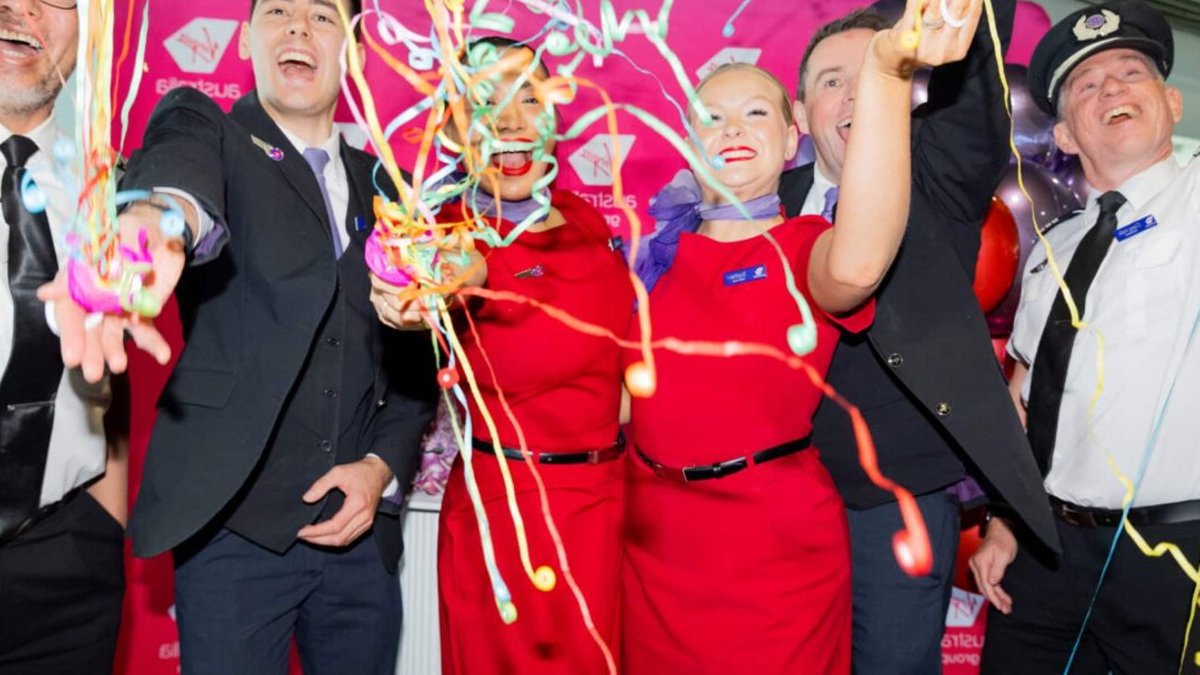
Virgin Australia’s profit jumps 22% as the airline declares its first dividend since returning to the ASX. The carrier posted a 21.9 per cent increase in underlying net profit to $404 million for FY26, driven by strong demand, fleet renewal and its internal transformation program. Underlying EBIT rose 13.4 per cent to $753 million, while revenue climbed 8.0 per cent to $6 billion. The airline’s underlying EBIT margin expanded 60 basis points to 12.0 per cent, with statutory net profit after tax reaching $501 million.
Virgin declared a fully franked dividend of 7.6 cents per share, marking its first payout since relisting in 2025. The airline credited strong customer demand, disciplined capacity management and effective fuel hedging for the performance. More than $450 million in gross benefits from its Transformation Program helped offset above-inflation cost pressures, particularly in airport charges and labour. The carrier’s balance sheet remained strong, with net debt at 0.9x underlying EBITDA, sitting below its 1 to 2x target range. Available liquidity stood at $1.6 billion and return on invested capital increased 140 basis points to 20.1 per cent.
Related: 20 Luxury Jails You Can Actually Book
Virgin’s Airlines segment delivered underlying EBIT of $616 million, up 15.2 per cent. The carrier took delivery of 17 aircraft during FY26, including 13 Boeing 737-8 MAX aircraft and four Embraer E190-E2s. This fleet renewal brought the average fleet age down to 11.5 years. Virgin carried 21.3 million passengers during the year, up 3.2 per cent, while load factor remained steady at 84.9 per cent. RASK increased 5.9 per cent, with domestic capacity growing 2.9 per cent and short-haul international capacity falling 4.5 per cent.
The airline’s Velocity loyalty program also contributed to the result, delivering underlying EBIT of $143 million, up 12.3 per cent. Revenue increased 8.1 per cent to $487 million, with external billings rising 12.4 per cent. Active membership grew 9 per cent, with more than 800,000 new members joining during the year. Points redemption reached a record 38.6 billion, up 4.6 per cent. Virgin is targeting low double-digit EBIT compound annual growth across Airlines and Velocity through to FY29, though EBIT growth is expected to moderate in FY27 following changes to RBA interchange fees and increased investment in a three-year transformation program.
Virgin’s on-time performance increased 30 basis points to 77.1 per cent, exceeding 80 per cent in the June quarter. Completion improved to 98.7 per cent, which Virgin said was the best among Australia’s major domestic carriers. The airline’s Strategic Net Promoter Score also increased three points to 30. CEO Dave Emerson said the result showed Virgin had become a stronger and more resilient airline. CFO Race Strauss described the Transformation Program as becoming an enduring capability within the business.
Related: Vintage-Inspired Sapphire Engagement Rings in Glasgow
The result comes a day after Qantas reported a $2.06 billion underlying profit before tax for FY26, down $330 million on the previous year. Qantas also declared a $300 million fully franked final dividend, following a $300 million interim dividend paid in April. Virgin’s result was supported by effective fuel hedging as fuel costs rose sharply during the year, while Qantas said its fuel bill increased by $610 million. The two airlines also recorded similar growth across their loyalty businesses, with Velocity EBIT rising 12.3 per cent and Qantas Loyalty EBIT increasing 12 per cent.
Virgin expects underlying EBIT to be broadly flat in FY27, with first-half EBIT expected to be in line with the first half of FY26. Domestic capacity is expected to fall 3 per cent in the first half, while RASK is forecast to grow 6 to 8 per cent. Fuel costs are expected to be around $700 million for the first half, with FY27 capital expenditure guided at $900 million to $1 billion.
